


Timber Sale Contracts
Too often timber harvests are conducted with no more than a nod and a handshake between the parties involved. Although this procedure sometimes works, a written agreement is far better.
 Official Government Website
What can we help you find?
What can we help you find?


Too often timber harvests are conducted with no more than a nod and a handshake between the parties involved. Although this procedure sometimes works, a written agreement is far better.
Experienced landowners know that a successful timber harvest requires planning. After management objectives, silvicultural prescriptions, and contractual requirements are formulated, a purchaser must be found. Usually, timber sale purchasers are responsible for logging operations. They can make you satisfied or disappointed in the results.
A snag is a standing dead or dying tree. It may have died because of wildfire, insects, disease, lightning, or a combination of factors. Regardless of the reason for its death, a snag can be very important to many kinds of wildlife.
Slash cleanup after harvest can serve many good and positive purposes; it protects the area from fire and insect damage, provides for silvicultural and timber stand improvements, provides grazing capabilities for wildlife, and last, but not least, makes the logging job look good.
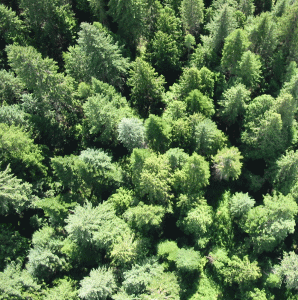
This edition of the Forest Forum highlights harvest summaries in Idaho for public and industrial forestland from 1997 to 2006.